
Reserve your session
Hypoxia
Train your cells to operate with less oxygen, thereby enabling you to perform at a higher level, thus improving every major system of your body (immune, musculatory, respiratory, cardiovascular, etc.)
Evidence
Hypoxia refers to a condition in which the body's tissues do not receive enough oxygen to meet their metabolic needs. The 2019 Nobel Prize in Medicine was awarded to three scientists: William G. Kaelin Jr., Sir Peter J. Ratcliffe, and Gregg L. Semenza. They were honored for their discoveries about how cells sense and adapt to oxygen availability, a process known as the hypoxia response.
This groundbreaking work expanded our understanding of how cells respond to changes in oxygen levels and opened up new avenues for treating various diseases, such as cancer and anemia, and for understanding the benefits of its use for the human body both at rest and during exercise.
This includes increasing red blood cells and hemoglobin, the cells that carry oxygen throughout the body, and improving oxygen transport to muscles and other tissues.
It also enhances angiogenesis, or the stimulation of new blood vessel formation in the body.
We traditionally associate hypoxia with a negative health condition because the vast majority of elderly patients end up developing symptoms of oxygen deprivation, which in many cases are a precursor to the end of life. But the reality is that, in individuals who are not in this situation, exposure to low oxygen levels (hypoxia) in cycles combined with normal (normoxia) and high (hyperoxia) levels generates multiple health and performance benefits for both athletes and the rest of us mortals.
What's a session of Hypoxia like?
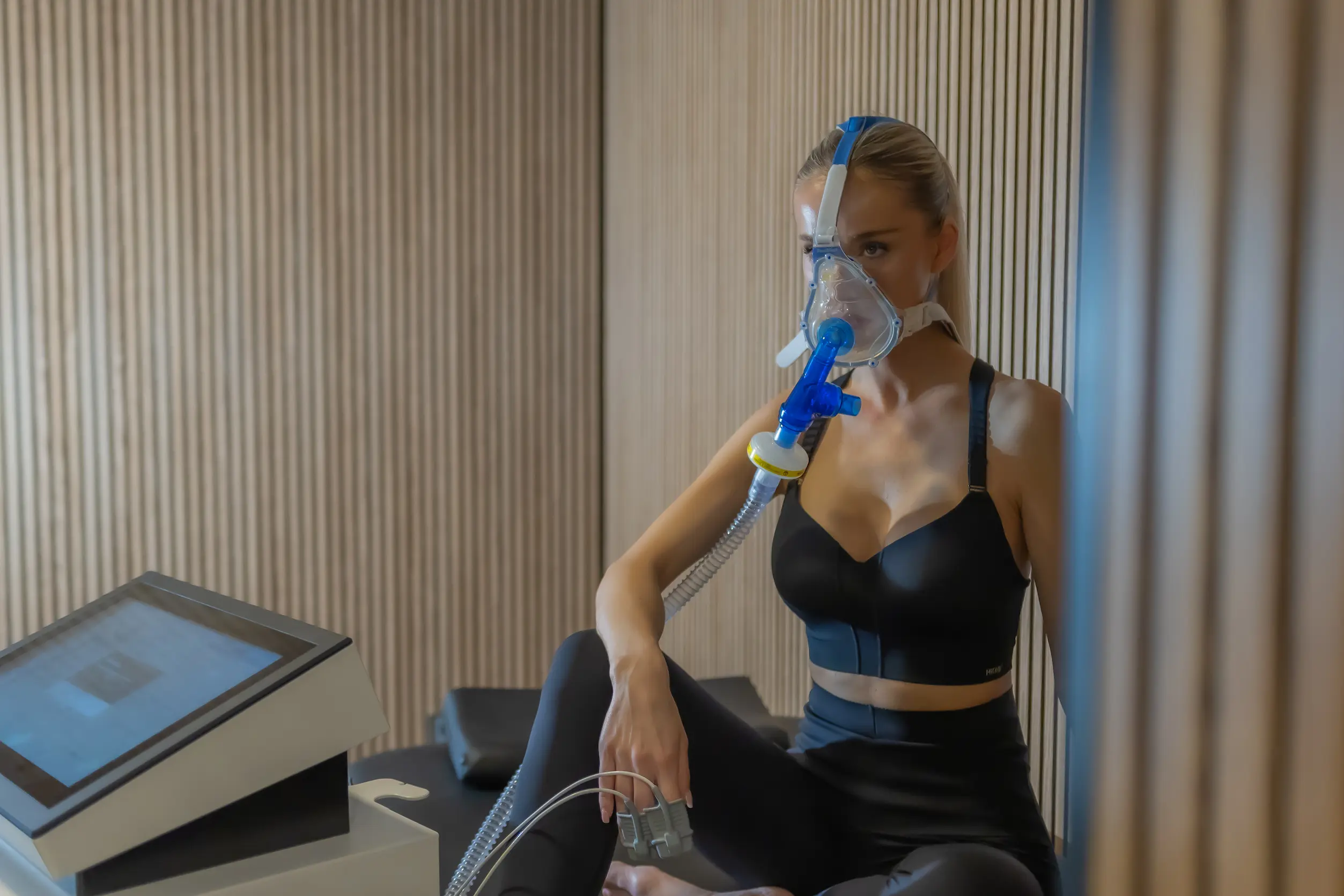
To begin with, the client will undergo an initial test that actively measures their body's response to different oxygen levels. This is done using a heart monitor that measures both heart rate and heart rate variability (HRV), as well as a blood oxygen monitor. For this process, the client simply relaxes at rest for 40 minutes, breathing through an oxygen mask.
In subsequent sessions, clients establish specific blood oxygen benchmarks, increasingly building their resistance to low-oxygen environments. Protocols can also be customized for specific situations such as sleep apnea, athletic performance, and anti-aging.
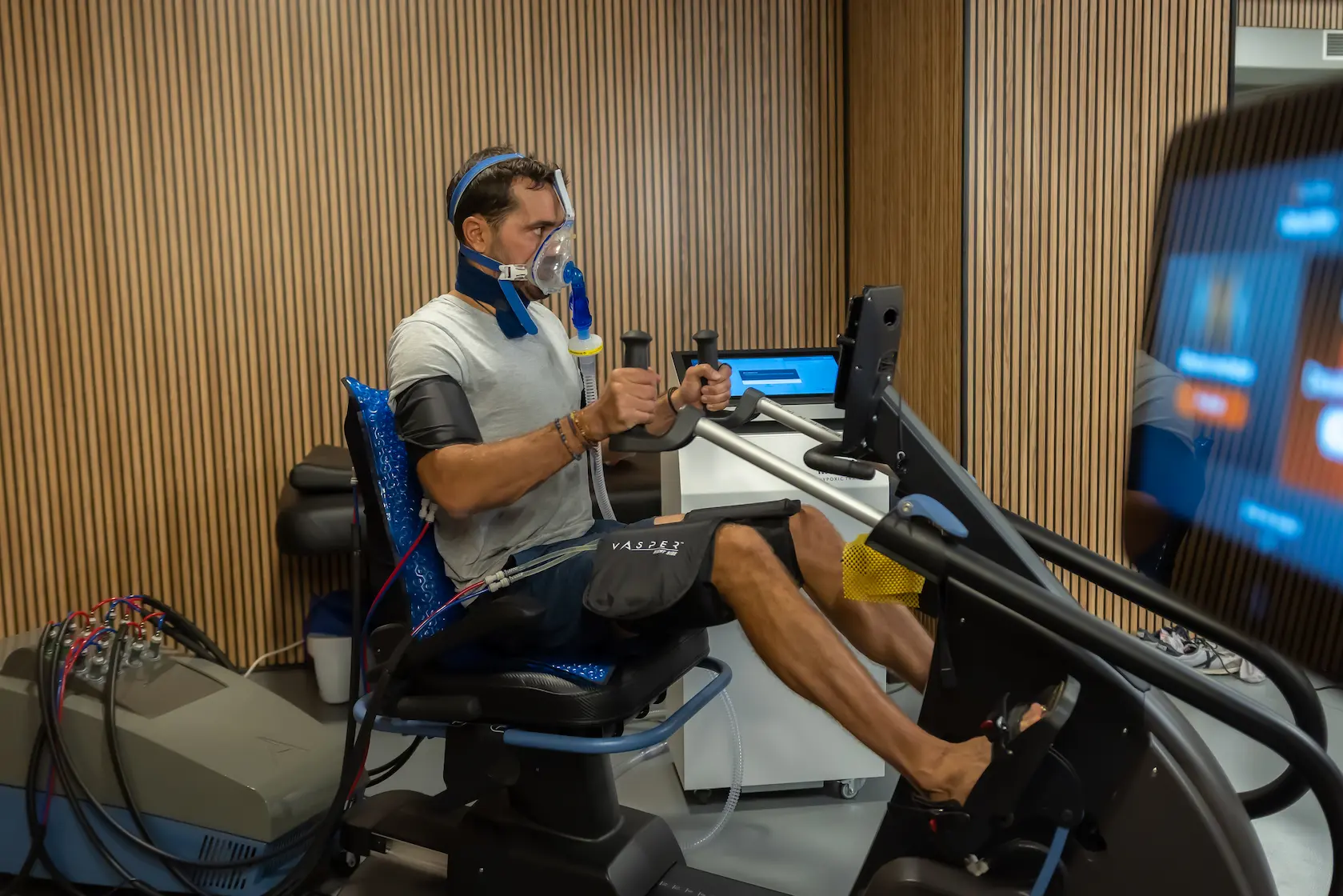
Over time, clients can “graduate” to training hypoxia simultaneously with exercise, such as with the Vasper.
Hypoxia is, in short, an exercise routine for every cell in your body, allowing you to function at a higher capacity, both physically and energetically and emotionally.
Benefits
Improved athletic performance
Improved training

Reduce oxidative stress

Helps with weight loss and visible reduction in waist and thigh size

Rapid recovery from exercise

Anti-aging